2026-09-30
Re2O vs. Rejuran: Comparing Benefits for Hydration, Elasticity, and Skin Texture
A detailed clinical comparison of Re2O (hADM) and Rejuran (PN), examining their ingredients, benefits for hydration, elasticity, and texture, treatment regimens, and safety precautions.
Re2O vs. Rejuran: Comparing Benefits for Hydration, Elasticity, and Skin Texture
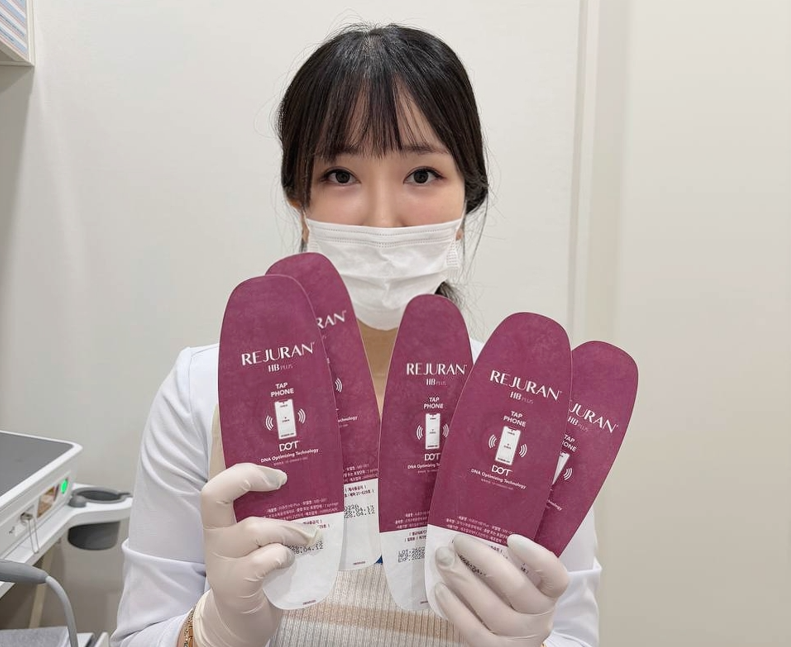
When looking into skin boosters, many people find themselves comparing Re2O and Rejuran. While both are introduced to improve overall skin condition, they differ fundamentally in their raw materials and product characteristics.
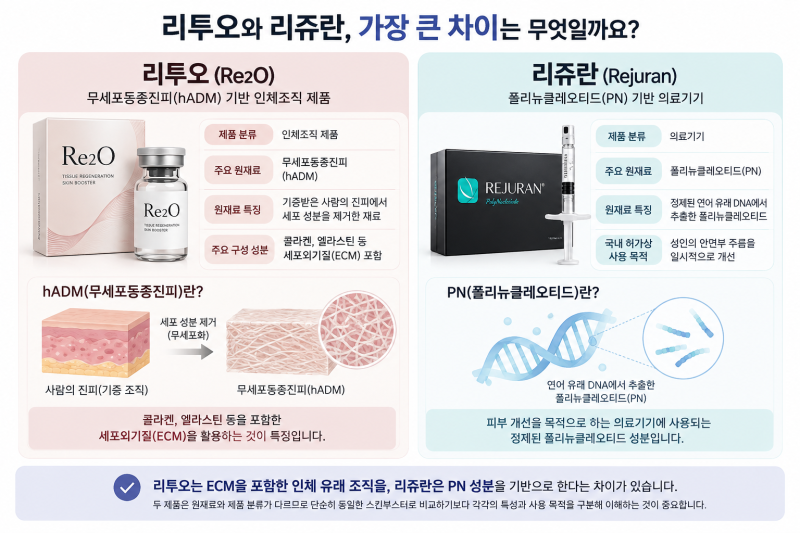
Re2O is a human tissue-based product utilizing human acellular dermal matrix (hADM), containing extracellular matrix (ECM) components such as collagen and elastin that constitute the skin. In contrast, Rejuran is a medical device whose primary active ingredient is polynucleotide (PN).
Therefore, rather than simply determining which product is inherently superior, it is essential to assess your current concerns—such as dehydration, loss of elasticity, or rough skin texture—and understand the unique properties and clinical purposes of each treatment.
Re2O vs. Rejuran: What Is the Biggest Difference?
According to official data from Humedix, Re2O is a human tissue product containing 150 mg of human acellular dermal matrix (hADM). hADM is derived from donated human dermis with all cellular components removed, distinguished by its preservation of the extracellular matrix (ECM), including collagen and elastin.
On the other hand, standard Rejuran is a medical device formulated with purified polynucleotide (PN). Its primary approved indication in Korea is the temporary improvement of facial wrinkles in adults.
Because the raw materials and regulatory classifications of the two products differ, they should not be viewed simply as identical skin boosters. It is crucial to understand their distinct characteristics and treatment objectives.
Which Difference Matters Most If You Seek a Dewy 'Glass Skin' Glow?
A dewy glow, or "mul-gwang," is not a medical diagnosis but rather a descriptive term for skin that appears moisturized, plump, and smooth. In clinical research, changes in skin condition are evaluated using objective parameters such as stratum corneum hydration, transepidermal water loss (TEWL), and surface texture.
Clinical studies utilizing PN have reported improvements in skin hydration, texture, and elasticity-related indicators.
Similarly, a clinical trial on particulate human acellular dermal matrix (phADM) published in 2026 observed improvements in skin moisture levels and skin barrier function markers. This split-face study compared hADM against hyaluronic acid on opposite sides of the face, reporting significant improvements in the areas treated with hADM.
However, it is difficult to generalize these research findings as universal outcomes for every Re2O or Rejuran procedure. The underlying causes of skin dryness, current skin condition, and specific treatment goals must all be taken into comprehensive account.
Re2O vs. Rejuran: Which Should You Consider for Loss of Elasticity?
Improvements in skin elasticity cannot be attributed exclusively to one specific product over the other. The 2026 clinical study on particulate human acellular dermal matrix (phADM) observed gains in dermal density, elasticity, and wrinkle depth reduction. Likewise, studies on PN have documented favorable outcomes regarding skin elasticity and wrinkle softening.
The distinction lies in the mechanism: Re2O utilizes an hADM-based matrix rich in extracellular components (ECM), whereas Rejuran relies on PN as its primary active ingredient.
Consequently, rather than making a choice based merely on age, it is important to holistically evaluate skin thickness, fine lines, dryness, and the degree of laxity to select the method that aligns best with your specific treatment goals.
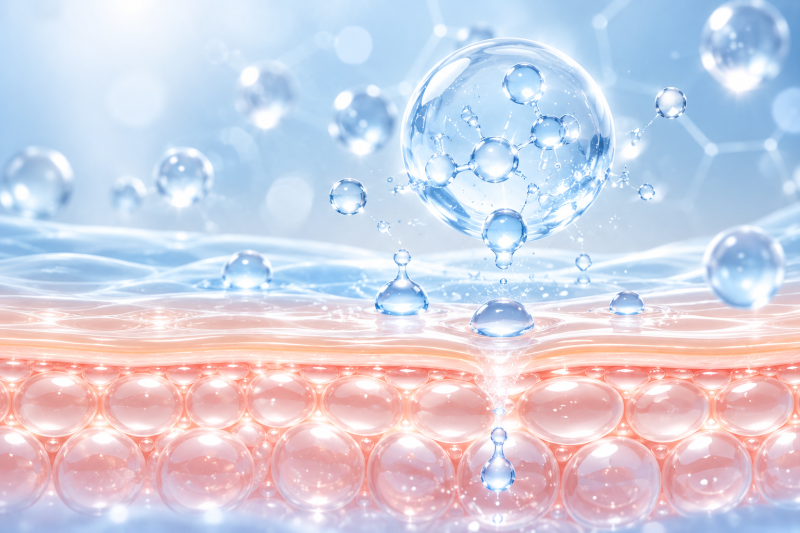
What If Your Concerns Are Texture and Enlarged Pores?
Skin texture and enlarged pores are influenced by diverse factors—including sebum production, declining skin elasticity, dehydration, and acne scarring—meaning optimal approaches will vary based on the root cause.
In a small-scale clinical trial utilizing particulate human acellular dermal matrix (phADM), increases in dermal density and reductions in pore surface area were observed. Clinical studies on PN have also shown improvements in skin roughness and pore volume.
Nonetheless, these studies should not be interpreted as a direct head-to-head comparison between Re2O and Rejuran. In particular, unless the specific product formulation used in the phADM study is confirmed to be identical to commercial Re2O, those findings cannot be definitive clinical claims for Re2O alone.
Therefore, rather than oversimplifying choices into "Re2O for pores, Rejuran for texture," it is critical to first evaluate why pores appear prominent and consider each product's attributes alongside your clinical objectives.
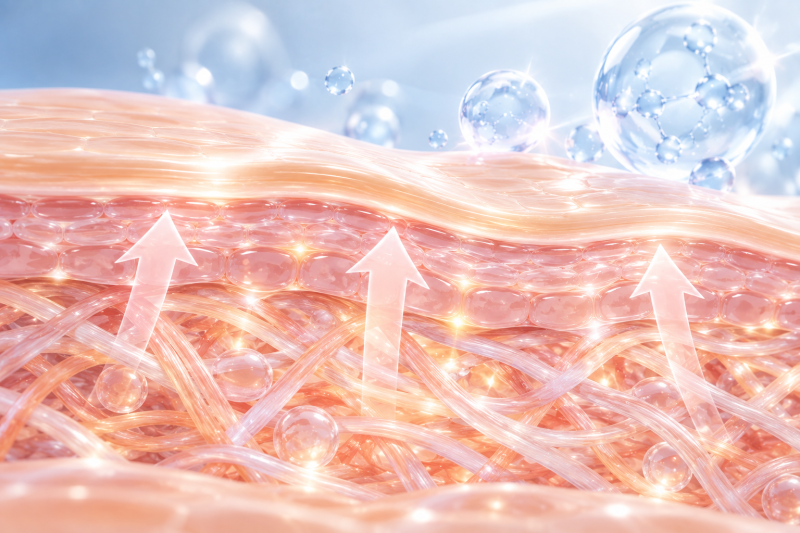
Are Treatment Sessions and Intervals the Same?
The frequency and intervals for Re2O and Rejuran treatments are not necessarily identical. Each clinical study adopts differing product volumes, injection depths, target sites, and intervals.
For instance, a clinical trial examining Rejuran for periorbital wrinkles performed three sessions at 2-week intervals, whereas another study focusing on the perioral area implemented three sessions spaced 3 weeks apart.
The 2026 clinical study on particulate human acellular dermal matrix (phADM) monitored cutaneous changes in 20 adult subjects over a 20-week timeline. However, the study protocol should not be assumed to mirror the standard manufacturer-recommended clinical schedule for Re2O.
Protocols tested in clinical trials are tailored specifically for investigative design and do not represent a rigid schedule for all individuals. A practical treatment regimen must be determined by factoring in product guidelines, personal skin condition, treatment area, and clinical objectives.

Potential Side Effects and Precautions Before Treatment
Because both Re2O and Rejuran are administered via intradermal injections, transient post-procedure reactions—including localized pain, erythema, swelling, bruising, embossing (papules), or tenderness—can occur. Rarely, adverse events like infection or nodule formation may arise, making careful post-procedure monitoring essential.
In the small-scale clinical trial related to Re2O published in 2026, temporary redness and mild swelling were noted, with no severe adverse events reported during the study window. Studies evaluating Rejuran have also documented injection-site swelling, discomfort, bruising, pruritus, and erythema. Still, these trial findings do not ensure identical safety outcomes across every patient.
The two products also differ in composition: Re2O is built on human acellular dermal matrix (hADM) sourced from donor tissue, whereas Rejuran is composed of polynucleotide (PN).
Before undergoing treatment, it is vital to consult thoroughly with a medical professional regarding the exact product, potential co-infusion agents, injection technique, individual allergy history, and anticipated side effects.
Notably, trials involving Re2O often administered it mixed with hyaluronic acid or other solutions; therefore, the observed efficacy and safety cannot be interpreted solely as results of Re2O monotherapy. Furthermore, because no direct comparative trials have assessed adverse event rates between the two, it is impossible to assert that one is categorically safer than the other.
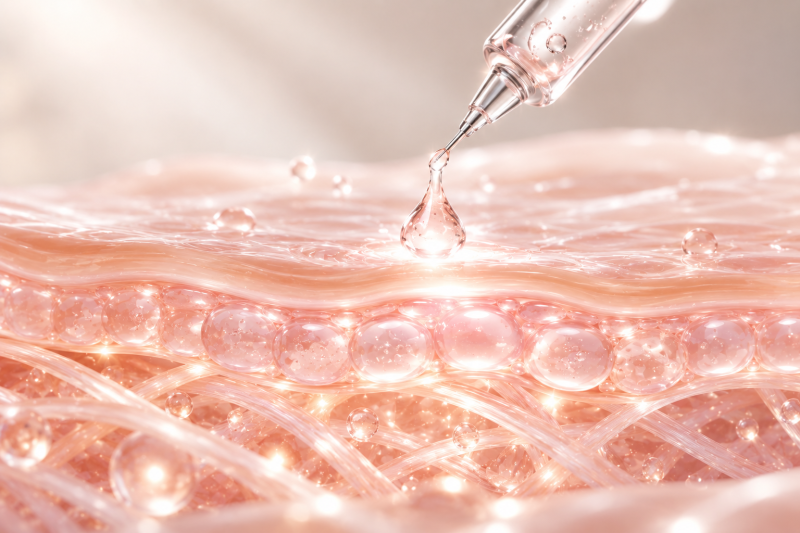
Re2O and Rejuran: The Key Is Choosing What Matches Your Skin
It is unrealistic to strictly categorize Re2O for elasticity and Rejuran for hydration. Moisture balance, firming, and skin texture are interrelated elements of skin health, and clinical investigations for both materials evaluate shifts across these parameters.
Because clinical trials vary in formulations, delivery techniques, sample sizes, and follow-up durations, individual study results cannot conclusively establish which product delivers superior clinical efficacy.
Rather than making a decision based purely on brand recognition or launch dates, it is best to carefully review the underlying causes of your skin concerns, desired changes, product mechanisms, and clinical evidence. A tailored treatment plan formulated through an in-depth consultation with a qualified medical professional remains the most reliable path forward.
#Re2O #Rejuran #SkinBooster #Re2OEffects #RejuranEffects #Re2ORejuran #SkinElasticity #TextureImprovement #InnerDryness #PoreImprovement #FineLines #GlassSkin #Collagen #SkinRegeneration #SinsaStationDermatology #GangnamDermatology #HIMIClinic
Frequently Asked Questions
What is the key difference in active ingredients between Re2O and Rejuran?
They differ substantially in formulation and classification. Re2O is a human tissue product derived from donated human dermis (hADM) that preserves the extracellular matrix (ECM), whereas Rejuran is a medical device formulated with polynucleotide (PN).
Which product is better suited for hydration and a radiant glow?
Neither product can be universally designated as the single best choice for hydration. Clinical studies on both PN (Rejuran) and particulate hADM indicate improvements in skin moisture levels and barrier function; the ideal selection depends on the underlying cause of dryness and your specific skin condition.
What should I choose for enlarged pores and rough skin texture?
The optimal approach depends on what is causing your pore enlargement and textural concerns. Studies on phADM noted reduced pore area and increased dermal density, while PN studies demonstrated improvements in pore volume and skin roughness. An individualized professional skin assessment should guide your decision.
Are the treatment intervals and session counts identical for Re2O and Rejuran?
No, the recommended session frequencies and treatment intervals are not necessarily identical. Clinical studies employ varying regimens (often spaced 2 to 3 weeks apart), and the actual treatment plan should be customized by a physician according to your skin status, treatment area, and aesthetic goals.
What side effects might occur after the procedure?
Temporary pain, erythema, visible embossing bumps, swelling, and bruising may occur. As with any intradermal injection, tenderness and, rarely, infection or nodule formation can develop. It is essential to discuss your medical and allergic history before the procedure and follow proper aftercare guidance.