2026-09-10
Smile Line Fillers: Should You Just Fill Them? Why Treatment Depends on the Cause
Filling smile lines without understanding their cause can lead to unnatural heaviness. Learn how volume loss, sagging, fillers, and collagen stimulators differ.
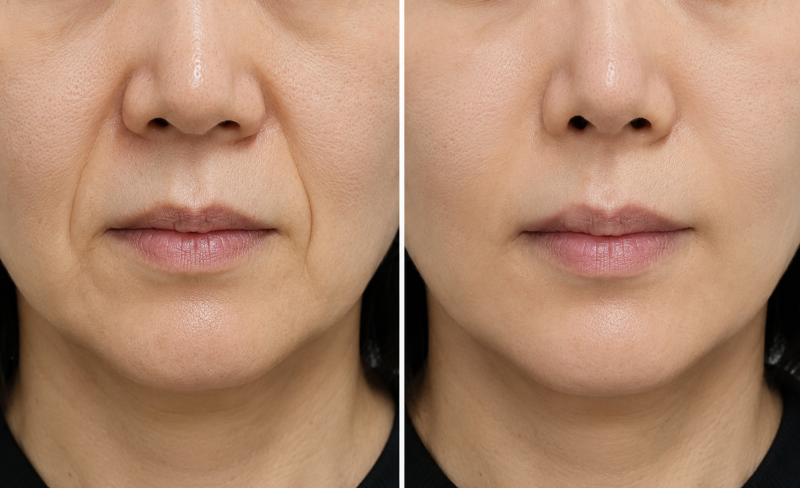
Smile Line Fillers: Should You Just Fill Them? Why Treatment Depends on the Cause
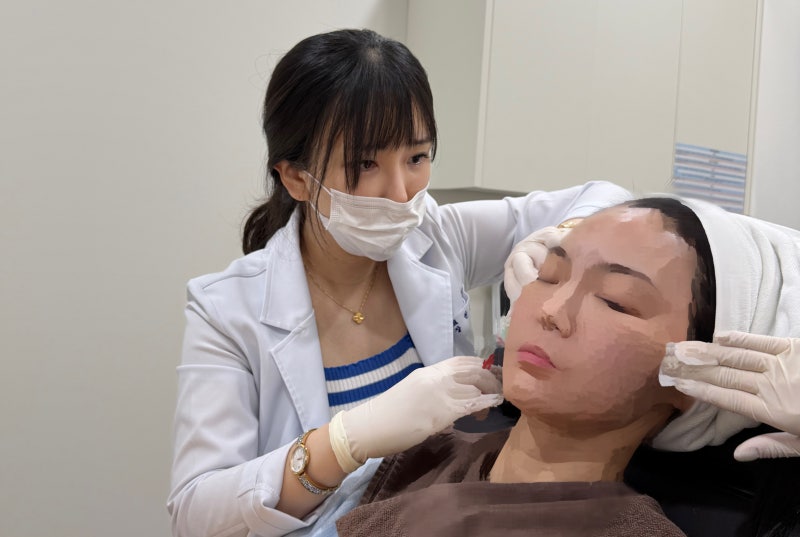
One of the most frequent questions from patients coming in for nasolabial fold consultations is:
“Will filling smile lines make them disappear completely?”
Since fillers are designed to restore sunken areas, it is natural to think so. However, when evaluating the actual face, while smile line fillers are well-suited for some, for others, simply adding filler can actually make the face look heavy or swollen.
This difference stems from the underlying cause of the nasolabial folds.
Today, we will explain why smile lines form, how fillers and collagen stimulators differ, and when lifting treatments should be considered alongside them.
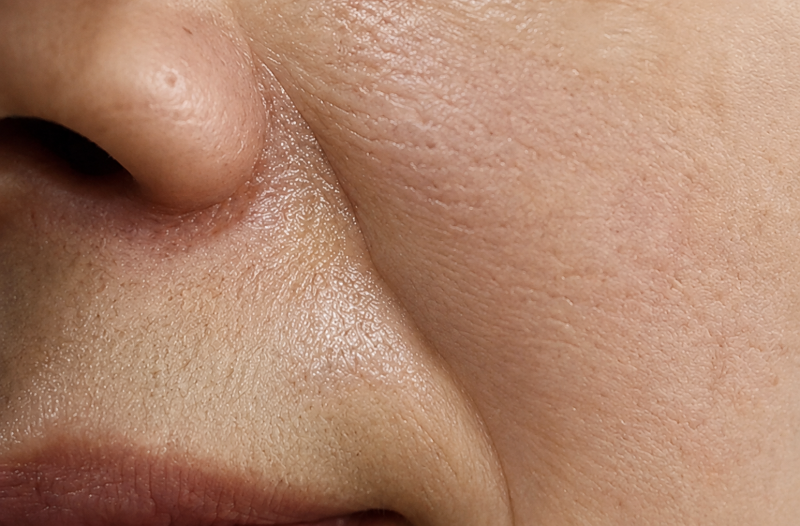
Why Do Smile Lines Form?
Smile lines (nasolabial folds) are not merely folds where the skin creases.
Various factors can influence them, including mid-face volume loss, sagging skin and soft tissues, facial bone structure, fat pad positioning, and dynamic muscle movements during facial expressions.
Therefore, even if nasolabial folds appear similarly deep, the root cause varies from person to person.
In broad terms, it is essential to distinguish between smile lines caused by volume deficiency and those caused by tissue sagging.
What If the Smile Lines Are Caused by Volume Deficiency?
With age, as mid-face volume diminishes, or if a person naturally lacks volume around the alar base or anterior cheekbones, the contours and shadows near the smile lines can appear deeper.
In these cases, nasolabial fold fillers can be considered to replenish the lost volume.
However, having visible smile lines does not mean simply filling directly along the crease line.
Often, the folds appear pronounced due to volume deficits in the surrounding areas rather than the fold itself. Thus, determining which exact areas are lacking volume must come first.
Ultimately, in smile line filler treatments, what matters most is not "how many cc's are injected," but rather where and to what extent volume is restored.
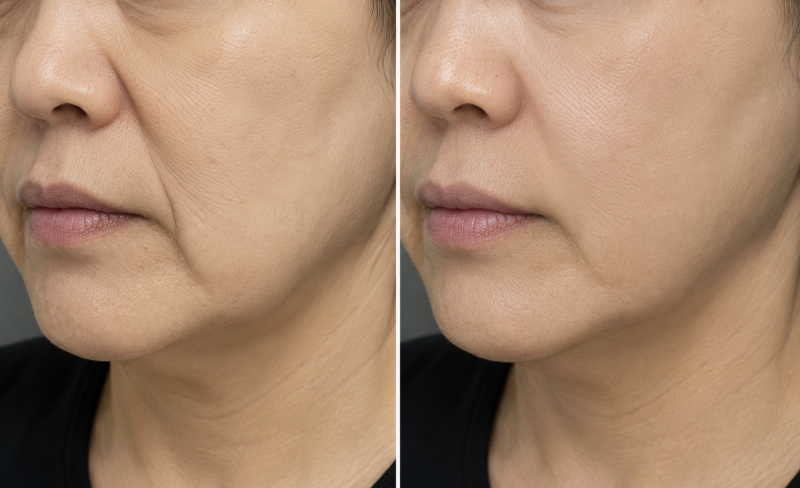
Smile Lines Can Also Be Caused by Sagging
Conversely, there are cases where sagging cheeks and soft tissues are the primary cause, rather than a lack of volume.
As tissues from the upper face descend, a boundary forms near the nasolabial area, casting a shadow below it that makes the fold appear deep.
In such cases, repeatedly filling the sunken-looking area with filler can lead to undesirable outcomes.
Adding excessive volume to already descended tissues can make the mid-face and perioral area appear heavy, bulky, and unnatural.
Therefore, instead of asking "How much filler should I get for my smile lines?", it is crucial first to evaluate: "Are these folds caused by deflation or by sagging?"
If sagging plays a significant role, combining or prioritizing lifting treatments suited to the facial condition may be a better approach than filler alone.


What Is the Difference Between Fillers and Collagen Stimulators?
Recently, another question has become quite common:
“Can’t I fill them with Radiesse or Juvelook instead of traditional fillers?”
While both hyaluronic acid fillers and collagen-stimulating treatments are viable options when addressing volume concerns, their mechanisms of action differ significantly.
Hyaluronic acid fillers directly supplement missing volume through the physical presence of the injected gel. They are ideal when specific hollows are distinct, or when precise control over localized shape and volume is desired.
On the other hand, collagen stimulators like Radiesse and Juvelook operate on a different principle from hyaluronic acid fillers.
Radiesse is based on Calcium Hydroxylapatite (CaHA) microspheres and can be utilized for both structural volume supplementation and biostimulatory collagen induction depending on the dilution and technique.
Juvelook utilizes PDLLA to trigger natural neocollagenesis; unlike hyaluronic acid fillers, it is not designed to immediately sculpt and hold specific shapes upon injection.
To put it simply: fillers directly replace missing volume immediately, while collagen stimulators stimulate the body to regenerate collagen for progressive, gradual structural tissue improvements.
Therefore, neither option is inherently superior; the right choice depends on the desired outcome and the patient's current facial structure.

Fillers, Collagen Stimulators, or Lifting: Which One Should You Choose?
The standard criterion is ultimately the underlying cause of your smile lines.
If localized volume deficiency is the main issue, fillers are suitable. If generalized volume loss combined with decreased skin and soft-tissue elasticity is the concern, collagen-stimulating treatments can be considered.
Conversely, if tissue ptosis (sagging) is the primary driver behind the fold, a structural lifting evaluation should take priority.
In reality, rather than a single isolated cause, many individuals present with a combination of volume loss, sagging, and reduced skin elasticity.
This is why, instead of asking "Which is better: filler, Radiesse, or Juvelook?", the essential first question is: "Why did my smile lines become deep in the first place?"

Is More Filler Better for Smile Lines?
Not at all.
Fillers inherently add volume to the face. Attempting to completely erase nasolabial folds by injecting excessive amounts will often leave the mid-face looking unnaturally puffy and heavy.
Furthermore, nasolabial folds are an anatomically natural feature of the human face.
Thus, rather than striving to erase the crease entirely, the goal should be naturally softening deep contours and distracting shadows in harmony with overall facial proportions.
Ultimately, the Cause Matters More Than What You Inject
Even if two people appear to have similar smile lines, one may primarily suffer from volume loss, while the other's issue stems from tissue sagging. Facial bone architecture and dynamic muscular patterns also play a role.
When seeking to improve smile lines, the proper first step is not picking a specific product, but comprehensively analyzing facial volume, soft-tissue condition, degree of sagging, and underlying bone structure to select the appropriate methodology.
At Himi Clinic, rather than viewing smile lines in isolation, we assess the overall balance and structure of the entire face to provide a tailored treatment direction for each individual.
If you are concerned about smile lines,
Before asking "What should I inject?", find out "Why did they deepen?" first.
Because suitable procedures and outcomes vary based on individual facial anatomy and skin condition, please ensure you consult thoroughly with a medical professional prior to treatment.
#SmileLineFiller #NasolabialFillerSideEffects #SmileLines #NasolabialFoldFiller #SmileLineTreatment #SmileLineJuvelook #Radiesse #Fillers #SmileLineConcerns #FillerDosage #SmileLineFillerSwelling #SmileLineBotox #FillerReview
Frequently Asked Questions
Will filling smile lines with filler make them disappear completely?
No. Nasolabial folds are a natural anatomical feature of the face. The goal of treatment should be naturally softening deep shadows and contours rather than completely erasing the line. Overfilling can make the face look heavy and unnatural.
Are fillers effective for smile lines caused by sagging?
Filler alone is generally not recommended, and lifting treatments should be considered. When soft tissues have descended, adding excessive volume will only weigh down the perioral area, making it look bulky. Correcting the sagging is often the first priority.
What is the difference between fillers and collagen stimulators (e.g., Juvelook, Radiesse)?
Their mechanisms differ. Hyaluronic acid fillers provide immediate volume replacement via the injected material itself. In contrast, products like Radiesse and Juvelook stimulate your body's natural collagen production, yielding gradual and progressive tissue regeneration.
What is the most important factor when getting smile line fillers?
Understanding the root cause and identifying the exact injection planes are far more critical than simply the injected volume (cc). Rather than merely tracing the crease, a comprehensive assessment of surrounding volume deficits (such as the alar base or anterior cheekbones) and the degree of laxity is essential.